


Are Floating Staircases Safe for Families?
Are Floating Staircases Safe for Families?
Floating staircases have become one of the most sought-after design features in modern homes. Their sleek appearance and minimal structure create a striking architectural feature that can completely transform the look of a hallway or open-plan living space. As more homeowners explore contemporary staircase designs, floating staircases are increasingly chosen for their ability to introduce light, space and modern elegance.
However, alongside the excitement of such a distinctive design, many families naturally ask an important question. Are floating staircases safe for everyday family life?
At Jarrods Staircases, this is one of the most common questions we hear when discussing floating staircase designs with homeowners. Because the structure appears to “float” without visible supports, it can initially look very different from traditional staircases. In reality, floating staircases are carefully engineered structures that must meet strict safety standards and building regulations.
When designed and installed correctly, floating staircases can be just as safe as any traditional staircase. In many cases, they incorporate modern safety features that make them highly practical for busy households, including those with children.
Understanding How Floating Staircases Work
The first step in understanding the safety of floating staircases is to look at how they are constructed. Although the term “floating” suggests that the stairs are unsupported, this is simply a visual effect created through clever engineering.
In most floating staircase designs, the stair treads are supported by a concealed structural system. This may involve a hidden steel spine, internal brackets fixed into the wall, or a specially engineered framework that carries the weight of each step. These structural elements are designed to remain discreet so that the staircase appears to float effortlessly within the space.
Behind this elegant appearance lies careful structural planning. Every floating staircase must be engineered to support significant loads, including the weight of multiple people using the stairs at the same time. When properly designed, the structure is extremely strong and stable.
At Jarrods Staircases, the design process always begins with a detailed assessment of the property. This ensures that the staircase structure works seamlessly with the existing building while maintaining the highest standards of safety.
Meeting Building Regulations and Safety Standards
All staircases installed in UK homes must comply with strict building regulations. These regulations are designed to ensure that stairs are safe, comfortable to use and suitable for everyday living.
Floating staircases are no exception. Despite their contemporary appearance, they must still meet the same requirements as traditional staircases. These regulations cover important aspects such as tread depth, rise height, headroom and the installation of appropriate balustrades or handrails.
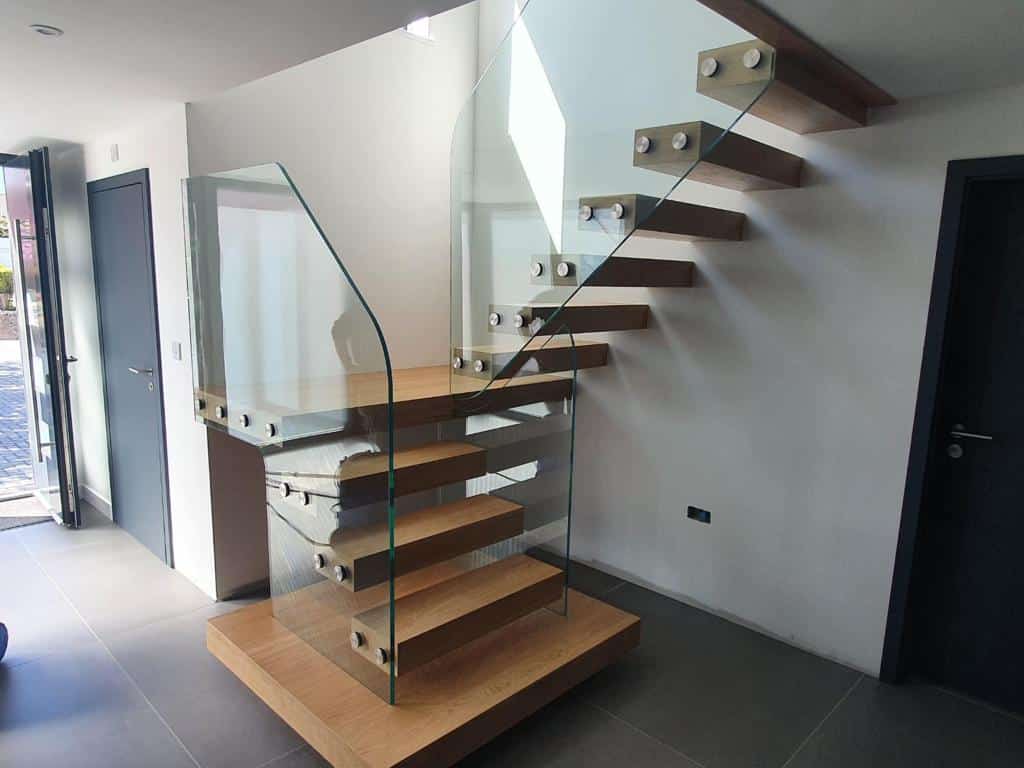
Balustrades play a particularly important role in staircase safety. They prevent falls and provide stability while using the stairs. Modern floating staircases often incorporate glass balustrades or slim metal railings that maintain the open appearance of the design while still providing essential protection.
When these safety features are included, the staircase not only looks impressive but also performs exactly as it should within a family home.
Stability and Structural Strength
One of the most common misconceptions about floating staircases is that they might feel unstable or flexible underfoot. In reality, a professionally designed floating staircase should feel solid and secure when in use.
This stability comes from the hidden structural components that support the staircase. High-strength steel frameworks or reinforced supports ensure that each tread can safely carry the weight placed upon it. These elements are carefully calculated during the design stage to ensure long-term durability.
During installation, precise measurements and secure fixings are essential. Each component must be installed correctly so that the staircase functions exactly as intended. When these steps are followed, the finished staircase provides the same level of stability as any conventional design.
For homeowners considering a floating staircase, it is reassuring to know that the visual lightness of the design does not compromise its strength.
Safety Considerations for Homes with Children
Families with young children often have additional concerns when considering staircase designs. Parents naturally want to ensure that their home environment is safe and practical for everyday life.
Floating staircases can absolutely be designed with family living in mind. One of the most effective ways to achieve this is through the use of full glass balustrades or closely spaced vertical rails. These features prevent children from slipping through gaps while maintaining the open appearance of the staircase.
Glass panels are particularly popular in family homes because they provide a clear barrier without blocking light. Toughened safety glass is extremely durable and designed to withstand impact, making it suitable for busy households.
Handrails are another important feature for families. Well-positioned handrails provide additional support for both children and adults while using the stairs. When integrated thoughtfully into the design, they contribute to both safety and style.
With the right design approach, a floating staircase can be perfectly suited to family life.
Slip Resistance and Everyday Practicality
Another important factor in staircase safety is the surface of the treads themselves. Floating staircases can be finished in a range of materials, including timber, stone or composite surfaces.
To ensure safe everyday use, the tread surfaces can be treated or designed to provide adequate grip. Timber treads, for example, can be finished with coatings that enhance traction while still maintaining their natural appearance.
In some designs, subtle anti-slip strips or textured finishes can also be incorporated. These small details help reduce the risk of slipping, particularly in homes where the staircase is used frequently throughout the day.
By combining attractive materials with practical finishes, floating staircases can offer both beauty and functionality.
Floating Staircases and Open Living Spaces
One of the reasons floating staircases have become so popular is their ability to complement modern open-plan living spaces. Their minimal structure allows light to travel freely through the home, which can make interiors feel larger and more welcoming.
For families, this open design can also improve visibility within the home. Glass balustrades allow parents to see through the staircase area more easily compared to traditional enclosed designs.
This sense of openness contributes to a more connected living environment. Rather than blocking off the hallway or separating spaces visually, the staircase becomes an elegant part of the overall interior.
When carefully designed, a floating staircase enhances the home’s layout without sacrificing safety or practicality.
Durability and Long-Term Performance
A staircase is one of the most frequently used features in a home, so durability is an important consideration for families. Floating staircases are built using high-quality materials that are designed to withstand daily use.
Steel frameworks provide structural strength, while hardwood treads offer long-lasting durability and natural beauty. Glass balustrades, when made from toughened safety glass, are also extremely resilient.
With proper design and installation, floating staircases are built to perform reliably for many years. Routine maintenance such as cleaning and occasional inspections will help ensure the staircase remains in excellent condition.
Many homeowners are surprised to discover that floating staircases can be just as robust as traditional designs while offering a much more contemporary appearance.
Combining Safety with Modern Design
One of the greatest advantages of floating staircases is their ability to balance safety with striking design. Rather than compromising one for the other, modern staircase engineering allows both elements to work together.
Glass balustrades provide protection without obstructing the view. Strong internal frameworks deliver stability while remaining hidden from sight. Carefully finished treads ensure secure footing while maintaining the elegance of natural materials.
The result is a staircase that feels both sophisticated and practical. It becomes a feature that enhances the home while remaining perfectly suited to everyday family life.
Why Professional Design Matters
Floating staircases may appear simple, but their design requires careful planning and specialist expertise. Every property is different, and factors such as wall structure, available space and interior layout must all be considered.
Working with experienced staircase designers ensures that these details are addressed from the very beginning. Structural calculations, material selection and installation techniques all contribute to the safety and performance of the finished staircase.
At Jarrods Staircases, we take pride in guiding homeowners through this process. By understanding both the design aspirations and the practical needs of the household, we can create floating staircases that are as safe as they are beautiful.
When thoughtfully designed and professionally installed, floating staircases offer families a modern and reliable staircase solution that enhances both the style and functionality of their home.
Jarrod Matthews of Jarrods Staircases has been installing bespoke staircases up and down the country. What started as a family operated business has now expanded to a team of highly experienced professionals that pay attention to detail in the craftsmanship of wooden and metal designs that are superior and made to last.