


How to light up a staircase
How to light up a staircase
A well-lit staircase isn’t just about safety – though that’s certainly important. The right lighting can completely transform how your stairs look and feel, turning what might be a strictly functional feature into a real focal point of your home. So, whether you’re dealing with a dark, uninviting staircase or simply want to add some atmosphere following a staircase renovation, there are plenty of ways to brighten things up.
In this blog, we explore practical solutions for illuminating your stairs, from simple fixes to more ambitious lighting schemes, and we’ll guide you through the installation process too.
How to light up a dark staircase
Dark staircases are surprisingly common, especially in older properties or homes where the stairwell doesn’t benefit from natural light. If you find yourself fumbling for light switches or feeling uneasy about navigating the stairs at night, it’s time to think about your lighting option, and during a full stair renovation is the best time to do this.
The first thing to consider is where the light actually needs to go. A single overhead pendant might not be enough, particularly if your staircase turns or has a landing. You might need multiple light sources positioned at different heights to eliminate shadows and ensure every step is clearly visible.
With this in mind, you have a few options to make a dark staircase lighter. These are:
- Wall lights
The simplest and often the cheapest option, the addition of wall lights is a popular fix, mainly because they provide light exactly where you need it without taking up floor space. Simply position them at regular intervals along the wall, ideally at a height that illuminates the treads without shining directly in your eyes as you climb.
- LED strip lighting
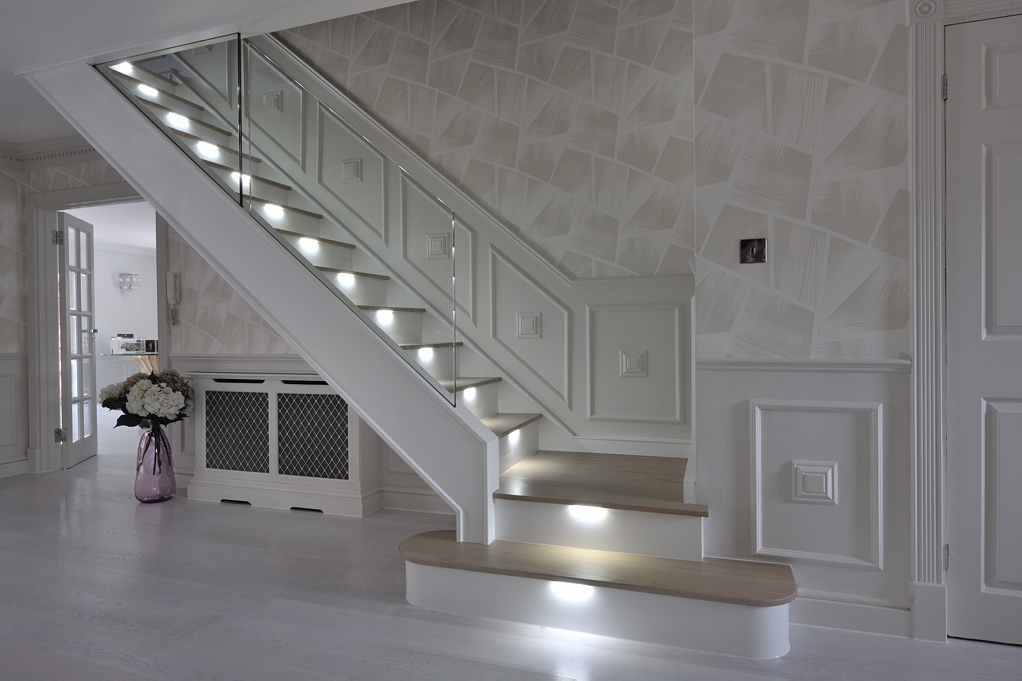
LEDs offer a modern solution that’s both practical and stylish. These thin strips can be installed along the underside of each step or recessed into the wall at floor level, creating a subtle guide that’s especially useful at night. The beauty of LED strips is their versatility – you can choose warm white for a cosy feel or go for colour-changing options if you’re after something more contemporary.
- Recessed spotlights
For staircases that are really lacking in light, you might want to think about recessed spotlights in the ceiling or wall. These are more expensive than the first two options, however, sit flush with the surface, providing focused illumination without cluttering your sightline.
- Rethinking your staircase design
Although the most drastic option, this is often the best. If you’re planning a renovation or building from scratch, consider a floating staircase or one with glass panels. These designs allow light to flow through and around the structure rather than being blocked by solid risers or balustrades. A floating staircase creates an open, airy feel that naturally brightens the space, whilst glass balustrades or treads can help bounce natural light around the stairwell. At Jarrods Staircases, we design and install both floating and glass staircases that can transform even the darkest stairwell into a light-filled feature of your home.
It’s also important to think about other features in your stairwell that may be contributing to the dark feel. For example, if your staircase is near a window but still feels gloomy, think about changing the curtains or blinds you have in place. Or if the colour of your walls is dark, consider a fresh coat of paint in a lighter shade.
How to install staircase lighting
Installing staircase lighting yourself can be done if you’re comfortable with basic DIY and understand electrical safety. That said, any work involving mains electricity should only be carried out by someone competent, and in many cases, you’ll need to involve a qualified electrician.
Before you start, plan out exactly where you want each light to go. Mark the positions on the wall or ceiling, and think about how you’ll route the cables.
For battery-powered or plug-in lights, installation is usually simple. Many LED strip lights and stick-on wall lights come with adhesive backing, so you can attach them directly to clean, dry surfaces.
If you’re installing wired wall lights, use a cable detector to check for hidden wires or pipes before drilling. Once confirmed safe, drill your holes and fit the wall plugs. Most wall lights come with a mounting bracket that you’ll secure before connecting the wiring.
For recessed lighting, you’ll need to cut openings in the plasterboard or ceiling, ensuring there’s enough space behind for the fitting and transformer. Always switch off the power at the fuse box before working on any electrical fittings. If you’re not confident, call in a professional.
How to wire staircase lighting
Wiring staircase lighting correctly is essential for both safety and functionality, and it’s important to understand that this isn’t a job to take lightly. In most cases, you’ll need to hire a qualified electrician to carry out the work properly and legally.
The wiring regulations in the UK are strict for good reason. Part P of the Building Regulations states that certain electrical work must be carried out by a registered electrician or notified to building control. Installing new circuits or making alterations in areas like staircases usually falls into this category, meaning you could be breaking the law if you attempt it yourself without the proper qualifications.
A qualified electrician will also test and certify the work once complete, giving you documentation that proves everything has been installed safely and to regulation. This is important for insurance purposes and for when you come to sell your property.At Jarrods Staircases, we work with experienced tradespeople who can ensure your staircase lighting is not only beautifully designed but also perfectly safe and compliant with all UK regulations. Get in touch to find out more.
Jarrod Matthews of Jarrods Staircases has been installing bespoke staircases up and down the country. What started as a family operated business has now expanded to a team of highly experienced professionals that pay attention to detail in the craftsmanship of wooden and metal designs that are superior and made to last.